In California's Central Valley, groundwater and surface water carry high concentrations of boron, a naturally occurring element and a remnant from millions of years ago, when the region sat beneath an ancient sea.
Boron is essential for plant health, but only within a narrow range. Too little stunts growth. Too much boron can damage sensitive crops, reducing yields and crop quality. For growers of almonds, pistachios, walnuts, grapes, and citrus using well water for crop irrigation, managing boron levels can help protect crop health, yield potential, and long-term orchard productivity.
To address this challenge, Boron Tech Solutions™ (BTS), a water technology company founded by the owner of Westwind Farms in Woodland, California, built a filtration process specifically for boron. The system uses a boron-selective ion-exchange resin to reduce boron concentrations in irrigation water. A regeneration cycle removes accumulated boron and prepares the resin for reuse. The same resin goes back into service instead of being replaced, which keeps operating costs down.
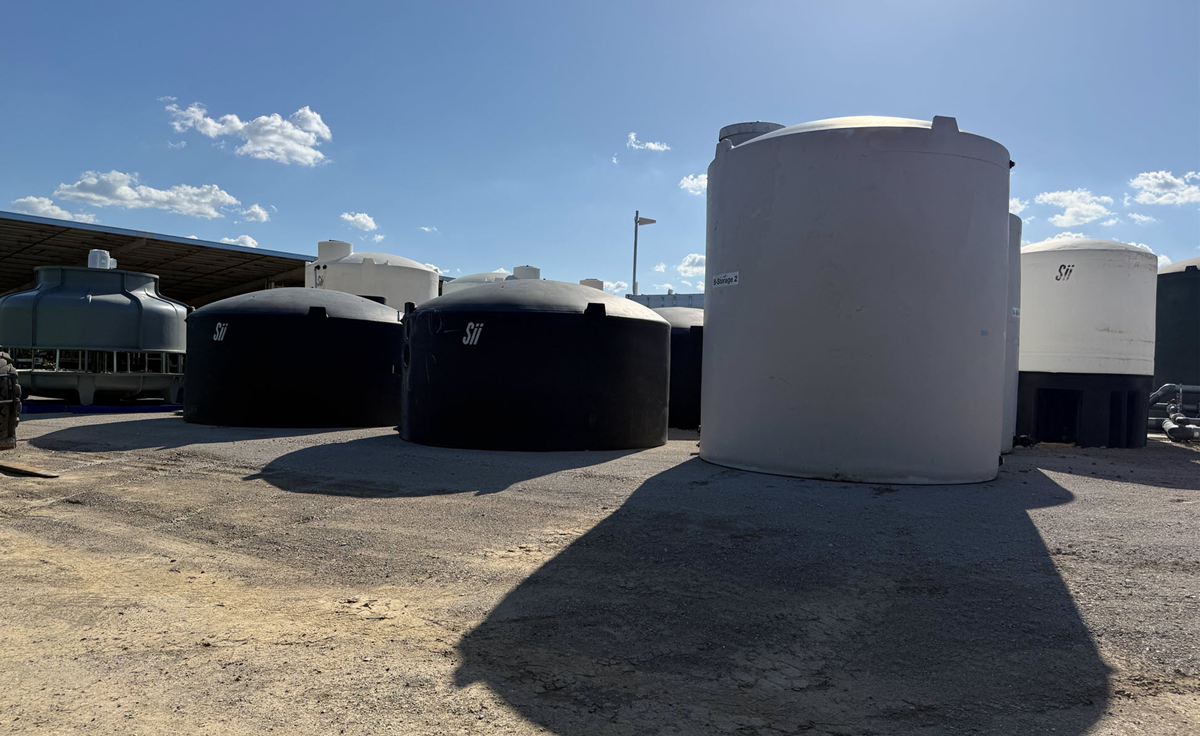
Boron management in California's Central Valley is necessary for the groundwater in the area.
Scaling the Solution
By 2022, BTS had demonstrated results in the field. The system was operating successfully at the local level, actuating pumps and valves with a local controller and displaying visualization on local HMIs.
BTS’ business model is built on a hub-and-spoke architecture: the central hubs handle the resin regeneration process, and spoke sites handle the filtration, receiving the regenerated resin from the hubs. This means success for BTS was dependent on standing up multiple treatment locations across acres and acres of farmland for various growers.
For this multi-site deployment, they needed a modern control and monitoring platform that could securely connect remote sites, provide real-time visibility, and scale cleanly as they added locations. To help develop that architecture, BTS turned to DNR Systems.
Who is DNR Systems?
 DNR Systems™ is a systems integration firm and longtime OptoPartner, a relationship spanning more than four decades. Based in the San Francisco Bay area, DNR has deep roots in agricultural automation and extensive experience in industrial controls.
What the System Needed to Do
DNR identified three critical requirements:
- First, security. These controllers would sit at remote agricultural sites and connect over cellular networks to a cloud-hosted SCADA system. Every link in that chain needed to be secure by default, not bolted on after the fact.
- Second, built-in communications. The controller had to publish data to the cloud on its own, with native support for industrial protocols like OPC UA® and MQTT. Eliminating external protocol converters and middleware would reduce hardware costs, simplify deployment, and improve reliability.
- Third, scalability. With the need for multiple sites, the first site had to be the template. That meant a repeatable architecture at every level, from the controller configuration to the SCADA screens.
DNR lead programmer Nick DeCosta explains, “We didn't need any middleman to take communications from the PLC side right to the cloud. We were looking for one package to handle everything we needed to go end-to-end for fully managed SCADA in the cloud.”
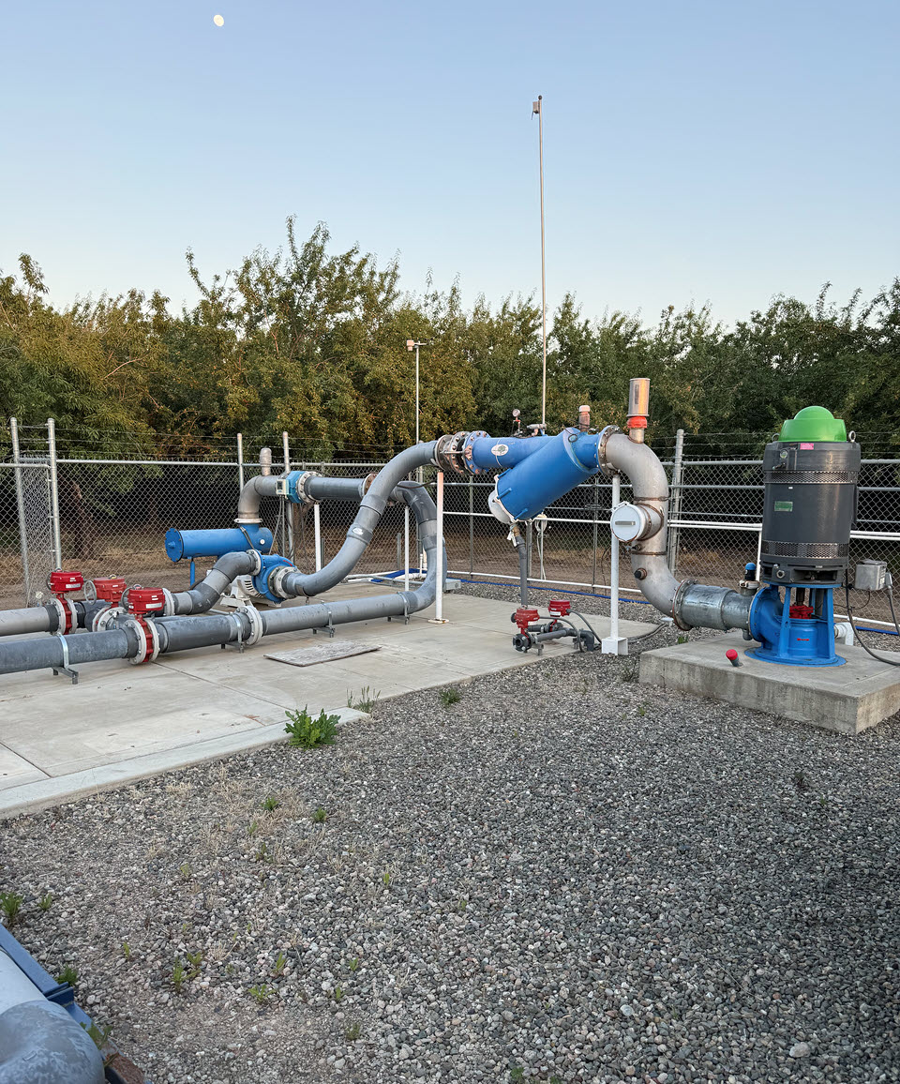
A remote wellhead site in California's Central Valley
Levels, flows, and valve positions from boron removal vessels feed the cloud SCADA system.
The Right Fit: groov EPIC
DNR evaluated other PLCs, but none provided the all-in-one feature set of Opto 22’s
groov EPIC. DNR was already familiar with the platform, but familiarity alone didn't drive the decision.
groov EPIC (
GRV-EPIC-PR1) met all three requirements:
- Security—Each controller communicates through a cellular router running an OpenVPN® client for encrypted site-to-cloud communications, with no exposed inbound ports at the field site.
- Communications—The built-in MQTT client publishes data directly to the cloud broker by exception, while the OPC UA server exposes data for poll/response access from Inductive Automation®’s Ignition® SCADA platform.
- Scalability—The platform's open architecture and embedded Linux® operating system provide flexibility for future development while supporting standardized deployment across multiple locations.
When security, native cloud connectivity, and scalability all mattered,
groov EPIC was the clear choice. But the
groov EPIC system brought more to the table than just the three baseline requirements:
- Real-time logic execution at the edge, including PID loops for pressure regulation and the safety-critical sequencing logic that keeps pumps and valves operating in the correct order with PAC Control, Opto 22's free flowchart-based programming software.
- Immediate, local visualization at each site with groov View, a built-in, web-based HMI. Through the EPIC's touchscreen, operators have direct access to the data at the site without purchasing additional HMI devices or hardware.
- Store-and-forward capability for each local historian and MQTT with Ignition Edge®. The controller runs Inductive Automation’s Ignition Edge SCADA platform directly, so if the cellular connection drops, the site keeps logging data and queues it for delivery when the link comes back.
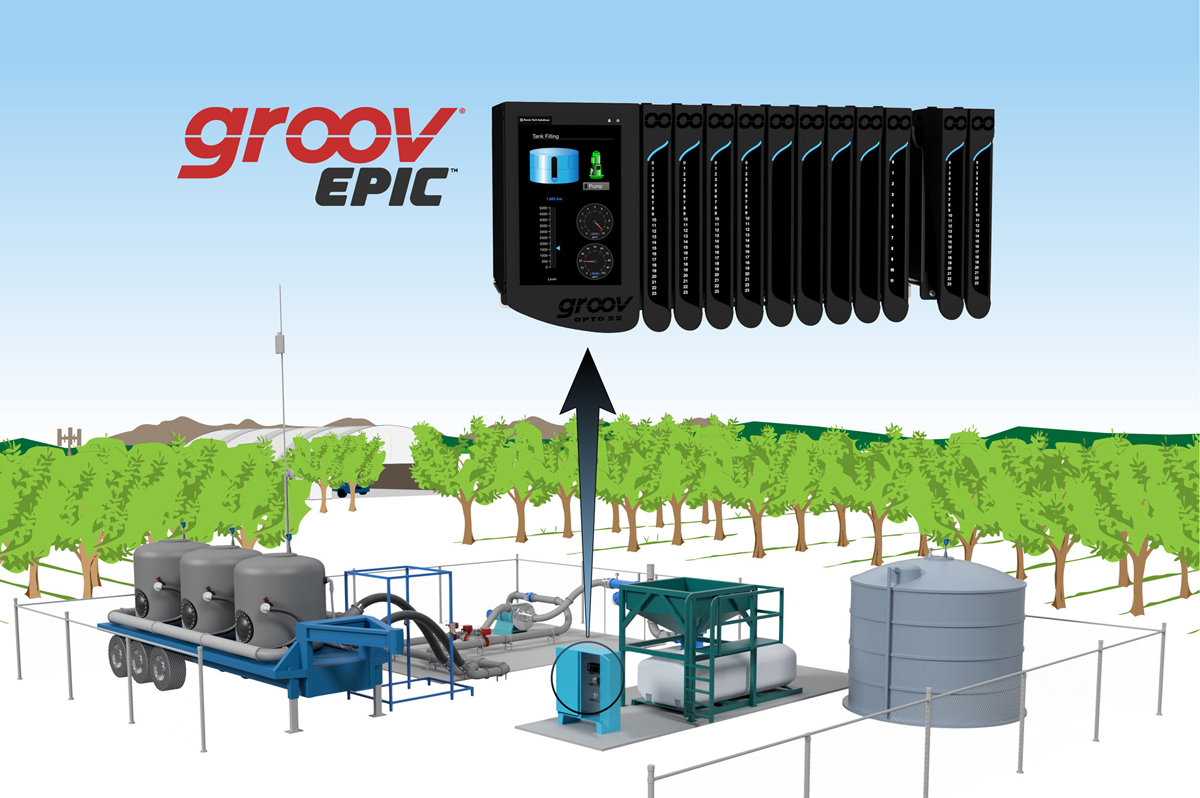
Opto 22's groov EPIC didn't just meet the security, communications, and scalability requirements—it brought even more.
Edge to Cloud: How the Architecture Works
DNR deployed
groov EPIC PR1 controllers for the multiple treatment hubs. Each controller manages site instrumentation, including pressures, flow rates, tank levels, pumps, and control valves. Local PID control loops regulate system performance through variable frequency drives (VFDs) and other process equipment.
The data path from field to cloud is straightforward. Each
groov EPIC publishes MQTT data that travels through cellular communications infrastructure to DNR's cloud environment hosted within Amazon Web Services® (AWS). Inside the AWS Virtual Private Cloud® (VPC), an Ignition Gateway from Inductive Automation serves as the central SCADA platform that provides historian capabilities and Perspective® web-based HMI screens accessible from any web browser.
“MQTT is the better route here because of report-by-exception,” DeCosta notes. “You can also confirm whether or not a command was sent.”
A Mosquitto™ broker manages the MQTT traffic, and for operator access, DNR configured a CloudFlare® tunnel on the Ignition gateway, exposing it through an identity provider with role-based authentication. Operators and managers get secure access from their browsers without installing VPN clients on their devices.
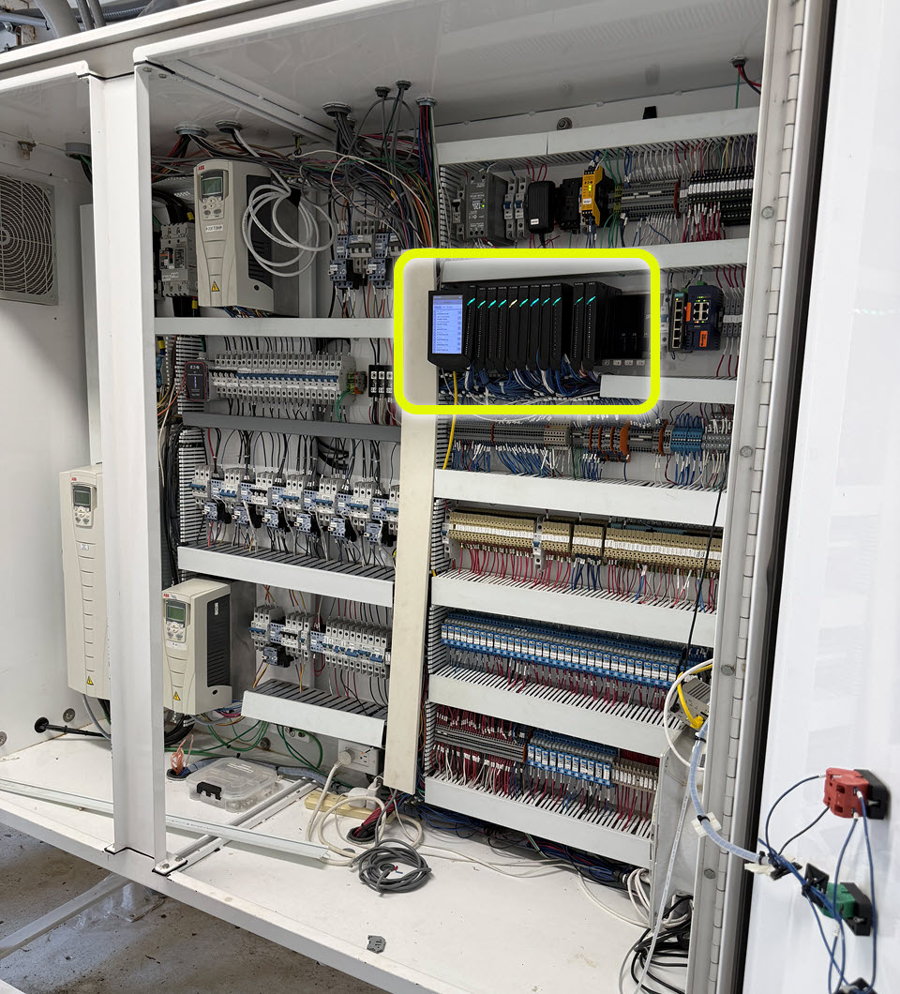
With groov EPIC, DNR has the template needed to quickly commission multiple sites.
When Pressure Spikes in a Second
During early development, DNR’s team learned the critical importance of real-time control at the edge.
“We are moving such large volumes of water that pressure in the pipes is really high,”explains Nicholas DeCosta, DNR’s lead programmer. “It jumped so high within one second that a pipe burst. So there's a heavy emphasis on catching things like that before they happen.”
DNR responded by building rigorous sequencing logic into the PAC Control strategies. Every valve actuation and pump start follows a strict sequence. If any step is out of place, the system pauses or stops.
The
groov EPIC runs safety-critical logic locally, independent of the network connection. If the cellular link drops, the controller keeps the process safe on its own.
“We were able to adequately address that issue. It happened once, adjustments were made, and it never happened again,” DeCosta says.
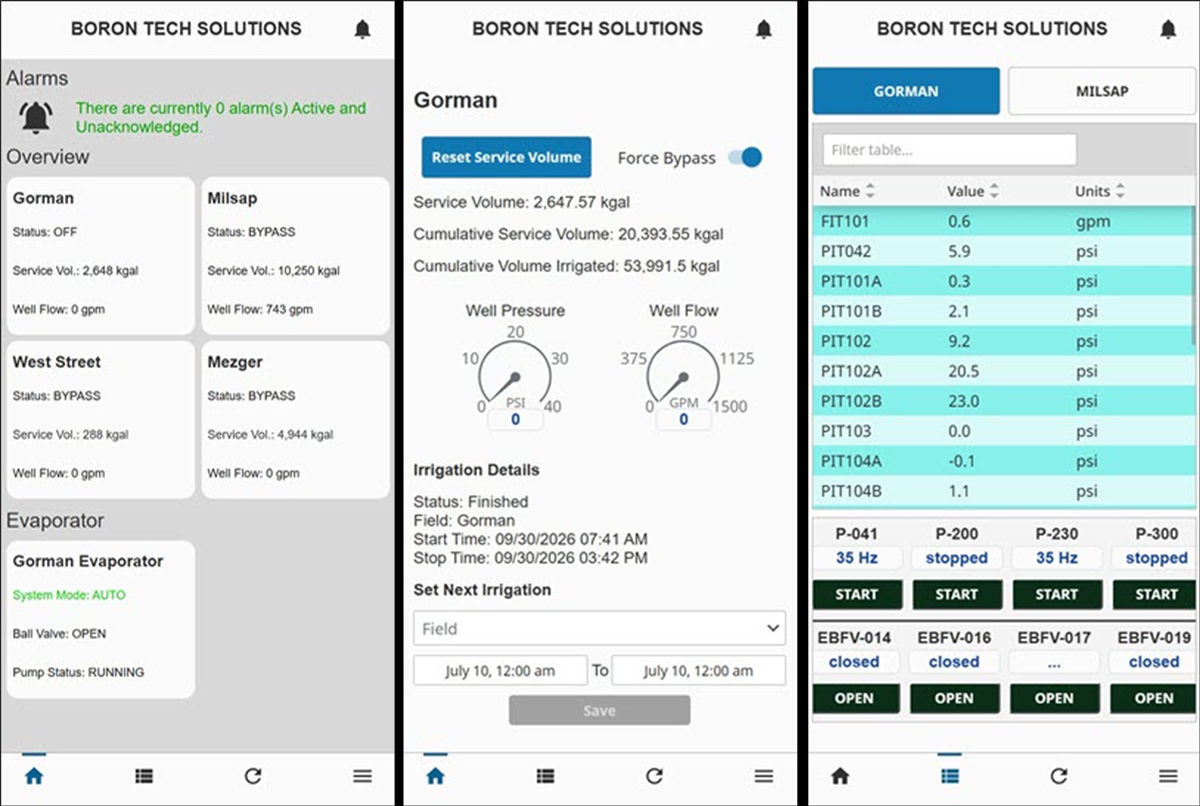
No more driving to sites to read gauges—differential pressure across each filter appears in real time.
Designed to Scale
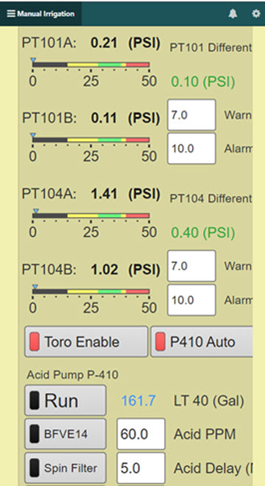
From the start, BTS and DNR knew they would keep adding sites as the business grew. They invested up front in making the architecture repeatable.
On the Ignition side, the team built a comprehensive template library: reusable tag structures (UDTs), screen layouts, alarm configurations, and reporting tools that deploy dynamically to new sites.
“We have a lot of various sites with similar logic and layout for controls on the screens,” DeCosta explains. “We basically spent a lot of time building up a solid template that you can throw in and it would immediately deploy to a dynamic display.”
The
groov EPIC side follows the same pattern. Each new site gets a controller, I/O configured for the site's specific sensors and actuators, and a cellular router connection. Once connected, the site appears in the central Ignition gateway automatically.
Since BTS operates on a hub-and-spoke model, each new hub is a clean copy from the previous one, using the same
groov EPIC configuration and the same Ignition templates. The architecture turns site deployment from an engineering project into a repeatable procedure.
Meaurable Results
The shift from a local control system to a remotely managed architecture shows up in concrete numbers:
- Irrigation interruptions cut by half. Operators can monitor conditions and respond remotely instead of discovering problems on their next site visit.
- 40% faster commissioning of new sites. The templated Ignition project and standardized groov EPIC deployment mean each new location requires configuration, not re-engineering.
- Three fewer man-hours of travel per day during irrigation season. Simple monitoring and control tasks no longer require driving to the site.
For a business model built on adding sites, the massive reduction in commissioning time compounds with every new deployment. What started as a single installation now spans multiple sites, some permanent, some temporary, with a clear and repeatable path for growth.
What Comes Next?
BTS continues to expand, and DNR is still helping to add sites to the system. With groov EPIC firmware version 4.0, DNR gained access to new maintenance capabilities: remote firmware updates via API calls and automated backups. For a growing fleet of controllers spread across dispersed locations, that reduces the overhead of keeping everything current.
DeCosta explains, “For every hub they add in the future, it's a clean copy-paste from the previous one using groov. It's already a good solution. Keep it going.”
The architecture DNR built isn't limited to boron removal. The same approach applies to any distributed process that needs remote monitoring and control. DNR already uses it across other industries, from vineyards to food production.
When asked about working with Opto 22, DeCosta doesn't hesitate: “My favorite time of the day. I've never experienced better customer support for a product in the industrial automation space.”
About DNR
DNR Systems, Inc. is a California-based systems integrator with expertise in industrial controls across food and beverage, oil and gas, and agricultural sectors. They specialize in delivering full-stack control solutions from panel design to field implementation and HMI development. Their services also include panel fabrication, piping, electrical, and programming services.
For more information, please visit:
http://www.dnrsys.com
About Boron Tech Solutions
Boron Tech Solutions (BTS) removes boron from agricultural water. Boron is an essential plant nutrient, but excessive concentrations can damage sensitive crops. The company is scaling its treatment approach into a repeatable solution growers can put to work wherever boron is a problem.
For more information, go to:
https://www.linkedin.com/company/boron-tech-solution s/about
Download case study pdf